

Comprehensive handbook on establishing foreign direct investment (FDI) companies in Ho Chi Minh City: Analysis of market access conditions under Decree 31/2021/ND-CP, accurate two-step procedures for obtaining IRC & ERC licenses, together with solutions for registered office addresses meeting fire safety standards. Download the exclusive 15-step bilingual English-Vietnamese checklist from A&D now.
Guide to Establishing a Foreign-Invested Company (FDI) in Ho Chi Minh City: Conditions and Procedures under the 2025 Investment Law
Ho Chi Minh City is one of the localities that attracts the most foreign investment capital in the country. For foreign investors, the difficulty usually does not lie in choosing a location but in correctly identifying market access conditions, following the proper procedural sequence, and preparing the correct type of documents that the registration authority will review.
Effective from 01/03/2026, the 2025 Investment Law (Law No. 143/2025/QH15) has come into force and changed certain contents compared to the 2020 Investment Law. The most notable point is that foreign investors may establish an economic organization before completing the procedures to obtain the Investment Registration Certificate (IRC). This article is compiled and updated according to the new law by the legal team of A&D Law Firm and Decree 96/2026/NĐ-CP implementing the Investment Law, to help you understand the conditions, applicable procedural routes, and matters requiring preparation when establishing an FDI company in Ho Chi Minh City.
1. What is an FDI Enterprise and Common Forms of Investment
1.1 Definition of Economic Organization with Foreign Investment Capital
According to Clause 22, Article 3 of the 2025 Investment Law, an economic organization with foreign investment capital is an economic organization that has a foreign investor as a member or shareholder. A foreign investor includes individuals with foreign nationality and organizations established under foreign law (Clause 19, Article 3).
Note the ownership threshold in Article 20 of the 2025 Investment Law. An economic organization in which a foreign investor holds more than 50% of charter capital (including indirect ownership according to points b, c of Clause 1, Article 20) must comply with conditions and procedures applicable to foreign investors. An economic organization not falling into these cases complies with procedures applicable to domestic investors (Clause 2, Article 20).
FDI enterprises are simultaneously governed by the 2025 Investment Law and the Enterprise Law (Law No. 59/2020/QH14, as amended and supplemented) as well as international investment agreements to which Vietnam is a party.
1.2 Wholly Foreign-Owned Companies and Companies with Vietnamese Partners
Investors may choose one of the following two ownership structures. Both are limited liability companies or joint stock companies under the Enterprise Law; "joint venture" is a practical term, not a separate business type.
Criteria | Wholly Foreign-Owned Company | Company with Vietnamese Partner (Joint Venture) |
Ownership Structure | Entire charter capital is held by a foreign investor. | Foreign investor contributes capital together with at least one Vietnamese individual or organization. |
Control | Investor independently decides management, operations, and profit distribution. | Voting rights are allocated according to capital contribution ratio and agreement in the charter, capital contribution contract. |
When Applicable | Sectors with no restrictions on ownership ratio and investment form for foreign investors. | When the sector has a cap on ownership ratio or investment form requirements; or when the investor voluntarily chooses to leverage local partners. |
Advantages | Protect trade secrets, confidentiality, and independence in operations. | Leverage partner's market knowledge, business relationships, and resources. |
Main Risks | Solely responsible for obtaining all permits and market adaptation. | Disagreement among capital contributors if agreements are not tight. |
Investors may also enter the market by contributing capital, purchasing shares, or equity interests in existing Vietnamese enterprises instead of establishing a new company. You can learn more in A&D's Corporate and Commercial Law Consulting section.
2. Market Access Conditions for Foreign Investors
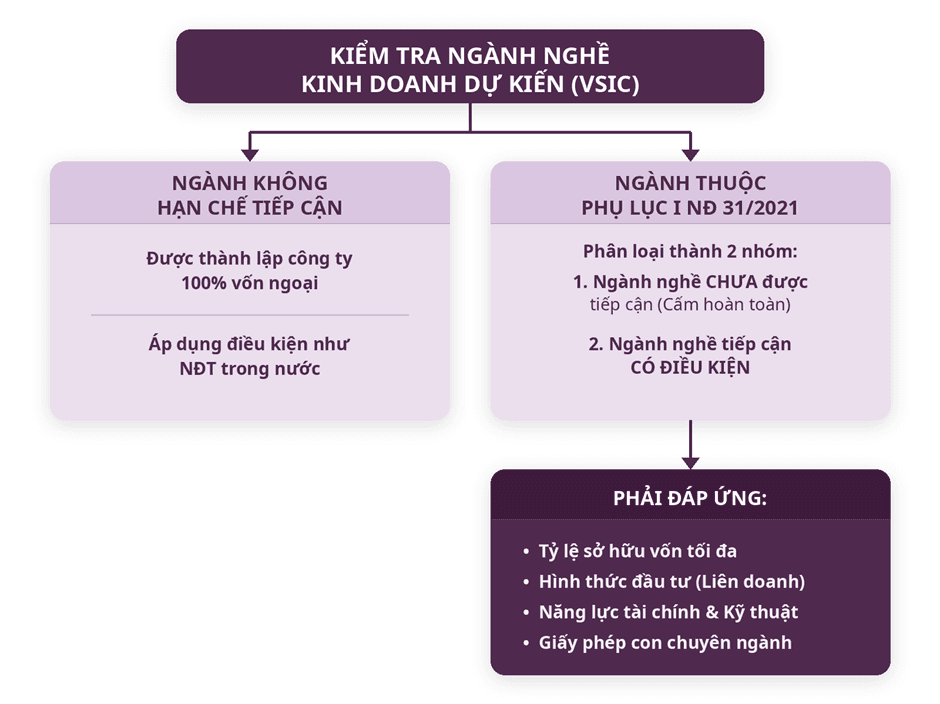
Figure 1: Checking Intended Business Line (VSIC)
2.1 Principles and Restricted Access List
According to Clause 1, Article 8 of the 2025 Investment Law, foreign investors are subject to the same market access conditions as domestic investors, except for cases in the restricted market access list under Clause 2, Article 8. Decree 96/2026/NĐ-CP specifies this list in Annex I, comprising two groups:
• Section A - Sectors and trades not yet open to market access: Foreign investors are not permitted to invest.
• Section B - Sectors and trades with conditional market access: Permitted to invest but must comply with conditions regarding ownership ratio, investment form, scope of activities, or other conditions (Articles 15 and 17 of Decree 96/2026/NĐ-CP).
Annex I of Decree 96/2026/NĐ-CP currently comprises 23 sectors or trades in Section A and 62 sectors or trades in Section B.
In addition to the above list, Clause 3, Article 15 of Decree 96/2026/NĐ-CP sets out additional conditions for sectors such as land, labor, natural resources, state monopoly goods, and housing. Sectors commonly subject to conditions include transportation, advertising, travel services, retail, and services under specialized management; investors must check each sector code in Annex I before finalizing the structure. For example, Section B of Annex I includes advertising, education, logistics services, and real estate business.
Two points to monitor: (i) Article 17 of Decree 96/2026/NĐ-CP allows investors who invested previously to continue applying old conditions, while new projects must comply with new conditions; (ii) Annex IV of the 2025 Investment Law reduces and amends certain conditional business sectors, effective from 01/07/2026.
2.2 Capital Ownership Ratio and Financial Capacity
Ownership Ratio. The foreign investor's ownership ratio must comply with caps set out in international treaties and specialized laws. According to point d, Clause 10, Article 17 of Decree 96/2026/NĐ-CP, if a company operates in multiple sectors with different restriction levels, the foreign ownership ratio shall not exceed the lowest restriction level among those sectors. In cases of multiple foreign investors or public companies, securities companies, or fund management companies, additional rules under points a, b, c of Clause 10, Article 17 apply.
Charter Capital. Law does not set a common minimum capital requirement for FDI enterprises. Statutory capital only applies to sectors where specialized law requires it, for example banks, insurance, securities; specific capital levels are determined by specialized documents of each field. Registered capital must be commensurate with and feasible for the project scale stated in the investment proposal.
Demonstrating Financial Capacity. Documents vary by circumstance and may substitute for each other, typically including: financial reports of the investor for the two most recent years; financial support commitment from parent company or financial organization; financial capacity guarantee; or other documents proving ability to contribute capital (point c, Clause 1, Article 32 of Decree 96/2026/NĐ-CP). Clause 7, Article 6 of Decree 96/2026/NĐ-CP provides that two-year financial reports need not be audited, and no validity period is required for support commitments or guarantees, unless otherwise provided by law.
For individual investors, common practice uses bank balance confirmation or statements from foreign or domestic accounts in Vietnam. This is a common method of proof, not the only type of document. Foreign language documents must be accompanied by Vietnamese translations (Article 5 of Decree 96/2026/NĐ-CP) and legalized by a consulate when required by law and not exempted under treaties.
3. Procedures for Establishing an FDI Company in Ho Chi Minh City under the 2025 Investment Law
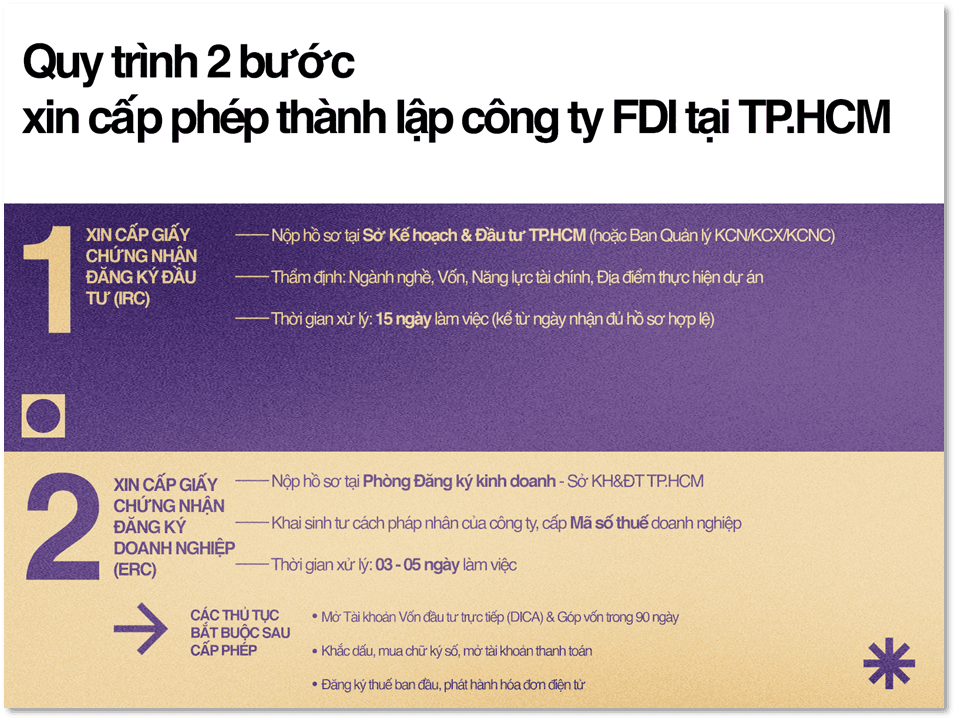
Figure 2: Two-Step Licensing Process for Establishing an FDI Company in Ho Chi Minh City
3.1 When IRC is Required
According to Clause 1, Article 26 of the 2025 Investment Law, investment projects of foreign investors and projects of economic organizations under Clause 1, Article 20 (foreign investor holds more than 50% of charter capital) must obtain an IRC. Clause 2, Article 29 requires completion of this procedure before implementing the investment project. IRC-issuing authority: the Department of Finance for projects outside industrial zones, export processing zones, high-tech zones, economic zones; zone management boards for projects within zones (Article 27 of the 2025 Investment Law; Article 36 of Decree 96/2026/NĐ-CP). In Ho Chi Minh City, this means Ho Chi Minh City Department of Finance or the competent zone management board, such as Ho Chi Minh City Export Processing and Industrial Zones Management Board, Ho Chi Minh City High-Tech Zone Management Board.
3.2 Two Applicable Routes
The 2020 Investment Law required foreign investors to obtain an IRC before establishing an economic organization in many cases. Clause 2, Article 19 of the 2025 Investment Law allows foreign investors to establish an economic organization to implement an investment project before completing IRC procedures, provided that market access conditions under Article 8 are met at the time of establishment. Thus, there are two routes:
Criteria | Route A: IRC First, Business Registration After | Route B: Business Registration First, IRC After |
Basis | Traditional sequence, complies with Articles 26 and Clause 2, Article 29 of the 2025 Investment Law. | Clause 2, Article 19 of the 2025 Investment Law. |
Advantages | Clearly identifies sector and location conditions before establishing legal entity. If application is rejected, no legal entity obligations arise. | Early acquisition of legal entity status, tax identification number, bank account, and authority to sign location rental and employment contracts. |
Disadvantages | Sequential processing results in longer total time. No legal entity during IRC application stage. | Must comply with market access conditions immediately upon business registration. Cannot implement investment project until IRC is obtained. Legal entity incurs tax and reporting obligations even if IRC is delayed or denied. |
Practice in Ho Chi Minh City | Registration authority is accustomed to handling this route. | New route applicable from 2026. According to Article 72 of Decree 96/2026/NĐ-CP, the Business Registration Request must contain undertakings to comply with market access conditions and the company must complete IRC procedures within 12 months from establishment date. It is advisable to consult with the Business Registration Office in advance about supporting documents. |
A&D Assessment: Route B is suitable when investors need legal entity status early for leasing locations, recruitment, opening accounts, and the sector has no clear restrictions. Route A is more suitable when the sector falls under Section B of Annex I, requires opinions from specialized authorities, or investors wish to minimize legal entity risks before confirming IRC approval.
3.3 IRC Application Procedure
The application package comprises the following main document groups (Clause 1, Article 32, applied per Clause 1, Article 39 of Decree 96/2026/NĐ-CP):
1. Written request to implement investment project.
2. Documents on investor's legal status: copy of valid passport for foreign individuals; establishment and registration documents for organizations (Article 2, Clause 13 of Decree 96/2026/NĐ-CP).
3. Investment project proposal: objectives, scale, investment capital, capital contribution schedule, location, labor requirements.
4. Documents demonstrating financial capacity (Section 2.2).
5. Documents on project implementation location: copy of land use rights documents or copy of other documents confirming location use rights, e.g., rental contracts (point đ, Clause 1, Article 32).
Application package must be in Vietnamese with electronic copies bearing digital signatures matching the hard copy; foreign investors without established economic organizations are exempted from digital signature requirements (Clause 5, Article 6). The registration authority shall notify receipt of a valid application within 02 working days and may only request supplementation once per application package; time for supplementation or clarification by the investor does not count toward the processing period (Clause 1, Article 6).
IRC Issuance Timeline: 10 working days from receipt of valid application for projects not requiring investment policy approval (Clause 3, Article 39 of Decree 96/2026/NĐ-CP). Projects in conditional sectors requiring opinions from specialized authorities may take longer.
3.4 Business Registration Procedure (ERC)
Investors apply at the Business Registration Office under Ho Chi Minh City Department of Finance via the National Business Registration Information Portal. Application package typically includes:
• Business Registration Request Form.
• Company Charter.
• List of members (limited liability company with two or more members) or list of founding shareholders (joint stock company).
• Legal documents of legal representatives, members, shareholders, and authorized representatives.
• Copy of IRC, if following Route A. For Route B: IRC not required, but the Business Registration Request must contain undertakings to comply with market access conditions (Article 72 of Decree 96/2026/NĐ-CP).
Processing timeline is 03 working days from receipt of valid application, per the Enterprise Law. Result is the Business Registration Certificate, which simultaneously serves as the business identification number and tax identification number.
3.5 Actions Required After Obtaining ERC
• Open an investment capital account (formerly called direct investment capital account, DICA) and transfer capital to this account per Circular 38/2026/TT-NHNN, effective from 18/08/2026 and replacing Circular 06/2019/TT-NHNN.
• Contribute full charter capital within 90 days from receipt of Business Registration Certificate per the Enterprise Law, while complying with the capital contribution schedule stated in the project application.
• Disclose business information, conduct initial tax registration, register digital signatures, settle accounts, and issue e-invoices. Enterprises independently determine seal form, quantity, and content; no need to register seal samples as before.
• Obtain labor permits, temporary residence cards for foreign investors and personnel; obtain specialized permits if the sector has conditions.
4. Head Office Address and Project Implementation Location
Address is commonly questioned in FDI applications. Below we separate legal provisions from practical considerations to help you prepare appropriately.
Classification | Content |
Regulation | Investor must have documents on rights to use the project implementation location (rental contract or other documents proving lawful use rights) per point đ, Clause 1, Article 32 and point b, Clause 3, Article 39 of Decree 96/2026/NĐ-CP. |
Regulation | Condominium units used for residential purposes cannot be used as offices or other commercial purposes outside residential use (point c, Clause 8, Article 3 of the 2023 Housing Law). Commercial and office area with proper building function is different. |
Regulation | Buildings must meet fire safety and prevention requirements per the 2024 Fire Prevention, Fire Fighting and Rescue Law and Decree 105/2025/NĐ-CP (replacing Decree 136/2020/NĐ-CP from 01/07/2025). This is the obligation of the developer, owner, and building management unit. |
Practice | Registration authority may request supplementation of construction permits, fire safety inspection certificates, or notarized rental contracts. Requirements vary by application and staff. This is not a mandatory documentation requirement in all cases under law. |
A&D Recommendation | Select buildings with clear office function and rental contracts signed directly with owner or management unit; request lessor to provide building legal documents before signing. |
5. FDI Company Establishment Consulting Services at A&D Law Firm
A&D Law Firm assists foreign investors from investment structure design to business operation:
• Investment Structure Consulting and Sector Review: cross-check sector codes with Annex I of Decree 96/2026/NĐ-CP and international treaties to determine ownership ratio, investment form, and applicable procedural routes.
• Application Preparation and Government Agency Coordination: translation, guidance on consular legalization, investment project proposal preparation, application submission, and liaison with registration authorities.
• Head Office Address Support: consult on selecting locations meeting legal requirements; if investors require, A&D Group provides office services and virtual office at commercial buildings in Ho Chi Minh City. Investors may independently select other suitable locations complying with regulations.
• Post-Establishment Support: DICA account opening, capital contribution, initial tax registration, labor permits, and temporary residence cards.
FDI Company Establishment Bilingual English-Vietnamese Checklist
List of documents requiring consular legalization, key timelines, and DICA account opening procedures: Download checklist here.
6. Frequently Asked Questions
Does a Foreign Investor Contributing Less than 50% Capital Need IRC?
Per Articles 20 and Clause 1, Article 26 of the 2025 Investment Law, an economic organization in which a foreign investor holds 50% or less of charter capital (and does not fall under indirect ownership cases in Clause 1, Article 20) complies with procedures applicable to domestic investors and is not subject to mandatory IRC issuance per Clause 1, Article 26. The foreign investor must still comply with market access conditions and capital contribution or share purchase procedures. Each case requires specific examination.
Does an FDI Company Need Minimum Charter Capital?
No common minimum. Sectors requiring statutory capital per specialized law must meet that level, and registered capital must be commensurate with the project.
Can Business Registration Occur Before Obtaining IRC?
In principle, Clause 2, Article 19 of the 2025 Investment Law permits this, provided market access conditions are met. The company cannot implement the investment project until IRC is obtained (Clause 2, Article 29). Practical application by registration authorities should be confirmed before submitting the application.
How Long Does It Take to Establish an FDI Company?
Timeline depends on route selection, sector, application completeness, and whether specialized authority opinions are needed. ERC timeline is 03 working days from valid application; IRC issuance timeline is 10 working days from receipt of valid application for projects not requiring investment policy approval.
Contact for Consulting
If you are preparing to establish a foreign-invested company in Ho Chi Minh City, A&D's legal team can assess your sector, applicable procedures, and application before submission. Schedule a consultation.
• Website: andlaw.vn
• Main Office: Floor 7, 520 Cach Mang Thang Tam, Nhieu Loc Ward, Ho Chi Minh City.
This article is provided for general reference only and does not substitute for legal advice on specific cases.
```
Need a legal business registration address?
A&D Virtual Office — a real address, full building documentation, from 490,000đ/month.